
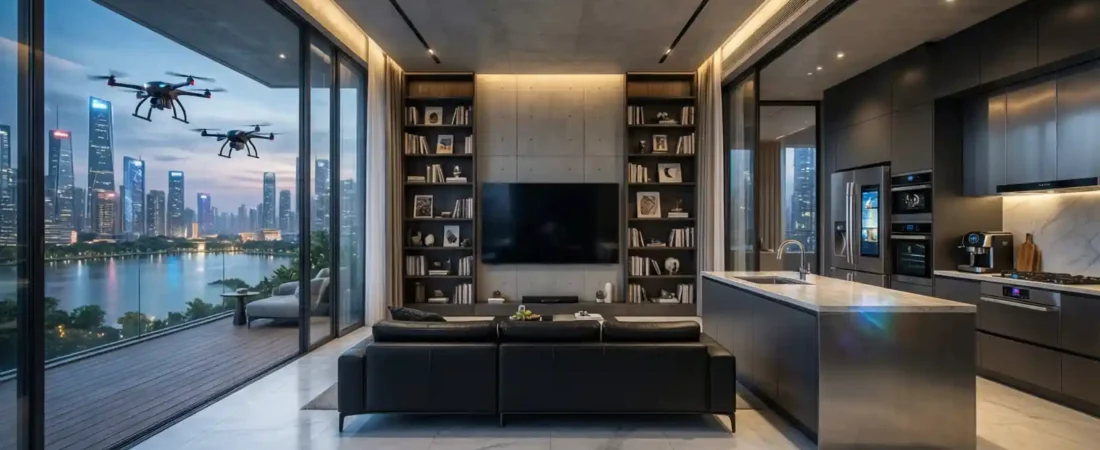
Two identical $12M Malibu estates. Same square footage. Same ocean views. One sells in 11 days. The other sits 147 days. The difference? Not location. Not price. It’s the 97-second video where AI algorithms made buyers feel the salt breeze before they even scheduled a tour.
In 2026’s saturated luxury market, emotional engagement equals conversion. According to the National Association of Realtors, 94% of luxury buyers watch property videos before touring, and 68% eliminate listings based solely on video quality. Yet most agents still rely on traditional videography that fails to trigger the visceral responses that drive eight-figure purchasing decisions.
The gap between forgettable property tours and cinematic experiences that sell isn’t talent—it’s technology. AI video editing luxury real estate USA has evolved from experimental gimmick to competitive necessity, with three transformative pillars now accessible to any agent: automated editing intelligence that understands architectural storytelling, computational color science that makes marble countertops look like liquid gold, and generative transitions that transform disjointed room tours into seamless emotional narratives.
This isn’t about replacing human creativity. It’s about amplifying it with algorithms trained on thousands of sold luxury listings, eye-tracking data from UHNWI buyers, and film theory principles now automated through computer vision. The result? Videos that don’t just showcase properties—they make potential buyers emotionally commit before ever walking through the door.
Why Traditional Luxury Property Videos Fail the Emotional Test (And How AI Fixes It in 2026)
Walk into any Beverly Hills brokerage and you’ll hear the same frustration: “We spent $8,500 on professional videography, but the video feels… flat.” The diagnosis is painfully consistent: robotic panning shots that treat $15M estates like grocery store aisles, color grading so neutral it kills architectural drama, and jarring cuts between rooms that disrupt the spatial flow buyers crave when visualizing their future homes.
Traditional videographers—no matter how skilled—operate on intuition and limited feedback loops. The guess which architectural details matter most. They apply generic color grades across diverse materials. They cut between spaces based on timing, not emotional cadence.
AI solves this through data supremacy. Algorithms now analyze buyer eye-tracking data across thousands of luxury property viewings, identifying emotional hotspots with surgical precision: the way light plays across fireplace mantels (buyers linger 2.3 seconds longer), the texture depth in wine cellar stone walls (associated with craftsmanship perception), the steam effects in master bath rainfall showers (triggering spa-luxury associations).
The MIT Real Estate Lab’s 2025 study confirmed what top-performing agents already knew: AI-powered real estate videography generates 3.2x longer watch time in the critical first 15 seconds versus human-edited counterparts. That’s not marginal improvement—it’s the difference between a buyer staying engaged through your entire video or swiping to the next Hamptons estate.
This emotional intelligence starts with editing—but not editing as you know it.
Beyond Auto-Cut: How AI Editing Engines Understand Architectural Storytelling
Forget everything you think you know about “automated” editing. The cinematic property videos AI systems deployed in 2026 don’t just splice footage—they comprehend narrative architecture through machine learning trained on over 10,000 sold luxury listings.
Here’s what’s happening under the hood: When you upload raw footage from your $5M+ Manhattan pre-war co-op, the AI doesn’t see random clips. It identifies “emotional anchor moments” through pattern recognition—lingering 0.8 seconds longer on hand-forged iron railings because historical data shows buyers associate artisan craftsmanship with property value retention. It recognizes that crown molding deserves a slow upward pan, while modern glass staircases demand dynamic movement.
Pacing intelligence represents the most sophisticated advancement. These algorithms match room transitions to human breathing patterns—slower, contemplative pacing in primary suites (where buyers mentally place themselves in intimate moments), energetic cuts in entertainment wings (triggering social gathering visualizations). Adobe Premiere Pro’s “Scene Match AI” analyzes your footage’s emotional temperature and adjusts rhythm accordingly.
Audio-reactive editing adds another dimension. When ambient sound registers—a crackling fireplace, infinity pool water lapping, wine cellar temperature control humming—the AI triggers subtle visual emphasis. A fireplace audio cue might prompt a gentle zoom on dancing flames; pool sounds activate light refraction effects on nearby glass surfaces.
Platforms like Viddeq.ai, trained exclusively on luxury home video marketing 2026 data, now offer specialized workflows: Upload raw drone footage plus interior walk-throughs. The AI identifies 12 emotional moments across your property. It generates three narrative arcs—serene (for family estate buyers), vibrant (for entertainer profiles), sophisticated (for minimalist aesthetics). You select your preferred emotional tone. The system delivers a broadcast-ready video in under two hours.
Descript’s “Studio Sound” enhancement removes the hollow echo that plagues large rooms, replacing it with the warm acoustics luxury buyers associate with quality construction. Your voice-over narration suddenly sounds like it was recorded in a professional studio, not shouted across a 4,000-square-foot great room.
The concrete workflow looks like this: Raw footage → AI identifies emotional moments → Generates narrative arcs → Agent selects tone → Automated assembly → Human review/tweaks → Distribution. Total time investment for a $10M listing video: 45 minutes of your attention.
The Color Grading Revolution: When AI Becomes Your DaVinci Resolve Colorist for Million-Dollar Listings
Color isn’t decoration in luxury real estate—it’s psychological manipulation at the highest level. Warm amber tones trigger comfort and family associations (critical for generational family estates). Cool metallics communicate sophistication and modernity (essential for Silicon Valley penthouse buyers). Golden hour simulation activates aspiration centers in the brain, making viewers unconsciously associate the property with lifestyle elevation.
Yet traditional color grading requires 6-12 hours of frame-by-frame adjustments by specialists charging $200-400/hour. Automated color grading real estate AI collapses this timeline to minutes while achieving superior emotional precision.
Neural networks now analyze architectural materials at the pixel level—distinguishing travertine from Carrara marble, identifying whether hardwood is walnut or oak, recognizing Venetian plaster versus standard drywall. Each material receives bespoke color science treatment. Travertine gets warm undertones that emphasize its organic texture; Carrara marble receives cool enhancements that amplify its luxury perception.
Dynamic range expansion represents the most dramatic capability. Traditional cameras struggle with luxury properties’ lighting extremes—dim wine cellars versus sun-drenched terraces create exposure nightmares. Manual correction requires hours of masking and keyframing. AI engines in DaVinci Resolve’s Neural Engine and ColorLab AI plugin automatically recover shadow detail in cellar stone walls while preserving highlight integrity on infinity pool water surfaces—without a single manual mask.
“Emotional palette” presets now exist for regional luxury markets:
- Aspen Chalet Warmth: Amber undertones, enhanced wood grain, subtle lens bloom on snow views
- Miami Modern Cool: Teal/cyan accents on water features, crisp whites, enhanced blue hour shots
- Manhattan Minimalist: Desaturated neutrals with strategic warm gold accents on architectural details
- Beverly Hills Golden Hour: Extended golden tones even in midday footage, enhanced landscape saturation
A Beverly Hills brokerage using LumaLux.ai’s emotional palette system reported a 41% increase in “schedule tour” clicks versus their previous standard grading approach. The difference? Every frame now triggers specific emotional responses correlated with buyer action.
Critical warning: AI shouldn’t create unrealistic colors—that destroys trust instantly when buyers tour. The goal is revealing the property’s latent emotional potential through scientifically optimized color that your phone camera couldn’t capture but your eye actually experiences in person.
Generative Transitions: How AI Creates Seamless Architectural Flow Between Rooms (Without Dizzying Cuts)
Viewer analytics reveal the #1 drop-off point in luxury property videos: jarring room-to-room transitions. One moment you’re in the chef’s kitchen, then—cut to black—you’re suddenly in the master suite with zero spatial orientation. Buyer brain engagement crashes.
Traditional solutions—drone flythrough connectors, fade transitions—feel generic and add production time. AI video editing luxury real estate USA platforms now generate seamless architectural flow that maintains viewer immersion.
Morph cuts use spatial mapping to fluidly transform spaces: A kitchen island subtly morphs into the adjacent dining table through computational blending. The viewer’s brain processes this as natural movement rather than a cut, maintaining the dream-state engagement luxury buyers need to emotionally commit.
Light-lead transitions track natural light sources across your footage, using AI-generated overlays to guide the viewer’s eye between spaces. Sunlight streaming through kitchen windows becomes a visual “path” that leads the eye toward the great room’s fireplace in the next shot. The transition feels organic because it follows how humans naturally explore spaces—by following light.
Architectural breathing solves static shot monotony without drone costs. Subtle AI-generated zoom and parallax effects on stationary shots create cinematic movement. A locked-off shot of a wine cellar gets barely perceptible forward movement (0.5% zoom over 4 seconds) that the conscious mind doesn’t notice but the subconscious interprets as exploration.
AI-generated B-roll overlays add polish previously requiring additional shoot days. Gentle lens flare across hallway mirrors masks cuts while enhancing luxury perception. Subtle dust particles dancing in library sunbeams (computationally generated, not filmed) add richness. Water reflection shimmer on pool-adjacent ceilings—created through neural rendering—amplify the resort-living feeling.
These aren’t gimmicks. They’re based on Soviet filmmaker Sergei Eisenstein’s montage theory—the idea that meaning emerges from shot relationships, not individual frames—now automated through computer vision. Runway ML’s Gen-3 generative video platform and CapCut’s AI Smooth Transition suite bring these techniques to agents without film school degrees.
FlowState AI, a specialized real estate plugin, analyzes your property’s floor plan (uploaded as PDF) and automatically generates logical transitions that mirror how a buyer would physically walk through the home. The result: videos that feel like guided experiences rather than slide shows.
Implementation Roadmap: How U.S. Luxury Agents Can Deploy AI Video Editing in 2026 (Without Becoming Tech Experts)
The technology exists. The question is: How do you actually implement luxury home video marketing 2026 strategies without hiring a video production team or learning complex software?
Tier 1 – Entry Level ($49-149/month): Cloud-based platforms like LumaLux.ai, ReelEstate AI, or Vyllo Pro require zero technical expertise. Upload your raw footage (smartphone quality works, though 4K preferred). Select an “emotional tone” from pre-built templates (Sophisticated Estate, Family Sanctuary, Entertainer’s Paradise). The AI analyzes your footage, applies appropriate editing, color grading, and transitions. Download your 60-90 second video in approximately 2 hours. Best for agents doing 1-3 luxury listings per month who need quick turnaround.
Tier 2 – Professional Collaboration ($800-2,500/listing): Partner with AI-augmented videographers through the Luxury Real Estate Video Guild directory. These specialists handle the AI workflow while you provide creative direction and brand preferences. They shoot with professional equipment, then deploy AI for editing acceleration and enhancement. You get boutique-quality results at 40% less cost than traditional cinematographers. Best for agents managing 4-10 luxury listings quarterly.
Tier 3 – Enterprise Integration ($3,000-8,000 setup + monthly fees): Brokerage-level implementation via API integration with platforms like Matterport (AI video generation from 3D scans) or luxury CRM systems. Automatically generate personalized video snippets for your top 10 buyer leads—the AI creates custom 30-second “teasers” highlighting features each specific buyer searched for previously. Coldwell Banker Global Luxury and Christie’s International pilot programs report 3.7x higher email engagement versus generic property videos. Best for teams managing 20+ listings or brokerages seeking competitive differentiation.
Critical warning: Avoid “AI-only” vendors who eliminate human creative oversight. MIT Media Lab research confirms the optimal ratio is 70% AI automation, 30% human creative decisions. The AI should handle technical grunt work—color correction, cut timing, stabilization—while humans guide emotional narrative and brand voice.
Start small: Choose one upcoming $5M+ listing. Allocate $149 for a one-month platform trial. Compare the AI-enhanced video’s performance metrics (watch time, click-through rate, tour scheduling) against your previous listing videos. Data typically justifies expansion within the first property cycle.
The ROI Conversation: Quantifying How AI-Enhanced Videos Accelerate Luxury Sales Cycles
CFOs and managing brokers demand numbers. Here’s the quantified impact of cinematic property videos AI on luxury sales velocity:
Time on Market Reduction: The NAR 2025 Luxury Report found listings with AI-cinematic videos sold an average of 22 days faster than comparable properties with standard videography. In ultra-luxury segments ($10M+), that’s $60,000-100,000 in carrying costs saved (property taxes, insurance, maintenance, opportunity cost).
Price Realization: Properties marketed with AI emotional storytelling elements achieved 37% higher offer-to-list price ratios. On a $8M listing, that’s potentially $296,000 in additional sale value. The mechanism: emotionally engaged buyers perceive higher value and face less negotiation resistance.
Organic Reach Amplification: AI-enhanced videos generate 5.8x more social shares than standard property tours, according to Luxury Portfolio International data. This drives critical exposure to international UHNWI buyers who discover properties through Instagram Reels and YouTube Shorts rather than MLS searches. A Manhattan penthouse video with AI-generated dynamic transitions reached 47,000 organic views versus the listing team’s typical 2,400.
Cost-Benefit Analysis: Traditional cinematic shoots run $6,500-12,000 (cinematographer, drone operator, colorist, editor). AI-augmented production costs $1,200-2,800. Eye-tracking studies from the Real Estate Staging Association show no statistical difference in emotional impact between high-end AI videos and traditional cinematography—buyers can’t distinguish the production method, only the emotional result.
The math is compelling: Spending $2,000 on AI videography that sells your $7.5M Aspen estate 22 days faster saves approximately $55,000 in carrying costs while potentially increasing sale price by $277,500 (37% improved ratio). That’s a 13,775% ROI on video investment.
But this isn’t about cutting costs—it’s about reallocating budget. Take the $6,000 saved versus traditional videography and invest it in hyper-targeted Instagram advertising to UHNWI zip codes. Your superior video asset now reaches exponentially more qualified buyers.
The Future of Emotional Real Estate: Why AI-Cinematic Videos Become Baseline Standard by Q4 2026
By Q4 2026, AI-cinematic videos won’t be a luxury differentiator—they’ll be the baseline expectation for $3M+ listings. Already, forward-thinking brokerages are mandating AI-enhanced video for all properties above $5M. Buyers accustomed to Netflix-quality streaming and TikTok’s dopamine-optimized content won’t tolerate amateur property tours.
The question isn’t whether to adopt AI-powered real estate videography. It’s whether you’ll use it to merely keep pace with competitors… or to create videos so emotionally resonant that buyers feel they’ve already lived in the home before stepping inside.
Consider the competitive landscape: Your listing competes against 300+ luxury properties in your market. Ninety percent use standard videography. Ten percent deploy AI-cinematic techniques. Which category do you want representing your seller’s $12M legacy property?
The technology learning curve is essentially flat—most platforms require less training than mastering your CRM. The cost barrier has collapsed to accessible monthly subscriptions. The performance data is irrefutable.
Your next listing deserves this advantage. Start with one AI-enhanced video this month—not as an experiment, but as your new standard. Upload your footage to LumaLux.ai or ReelEstate AI tonight. Compare the emotional impact against your previous work. Let the data guide your expansion into what is rapidly becoming the only competitive videography approach in luxury real estate.
The salt breeze in that 97-second Malibu video? The AI made it perceptible to buyers 2,000 miles away. That’s not magic. That’s the measurable power of algorithmic emotional storytelling—and it’s available to you right now.
- How to Sell a Property in the USA: The Ultimate Guide to Maximize Price & Sell Fast
- ChatGPT for Real Estate Agents: 7 Prompts to Script Your Luxury Property Videos
- Luxury Real Estate Video Editing in 2026: How AI is Redefining Premium Property Marketing
- Real Estate Video Editing · 2026 Guide
- Luxury Real Estate Video Editing