
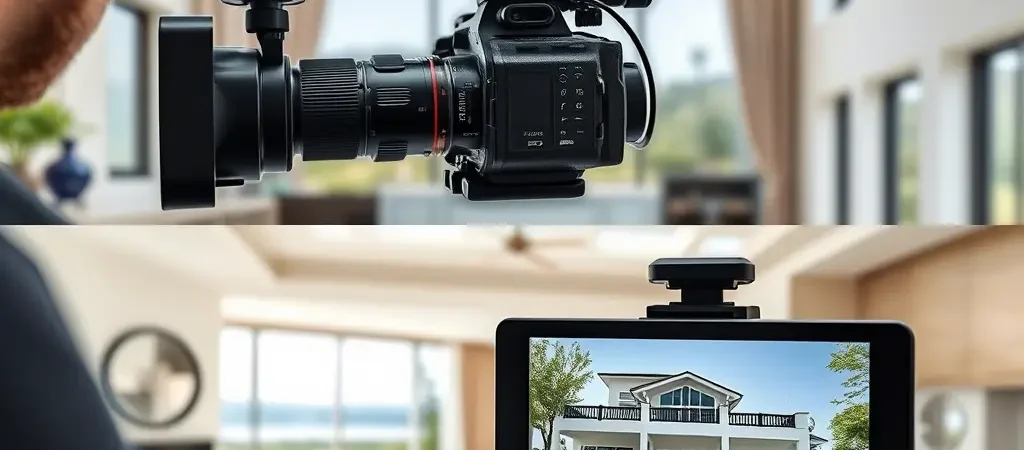
I’ll never forget walking into my first $5 million listing three years ago. The homeowner, a successful tech entrepreneur, looked at me skeptically and asked, “So, you’re going to film my house with your phone?” I chuckled and pulled out my professional camera rig. “Not quite,” I replied. Marketing luxury homes with video ,That same video ended up generating 2.3 million views and sold the property within two weeks. That moment taught me something crucial: in the luxury real estate market, video isn’t just a nice-to-have anymore—it’s the difference between a property that sits on the market and one that creates a bidding war.
The luxury real estate landscape has fundamentally shifted in recent years. High-net-worth buyers, especially those relocating from different cities or countries, expect to experience a property virtually before they ever set foot inside. Traditional photography simply can’t capture the grandeur of a mansion’s flowing spaces or the way natural light dances through floor-to-ceiling windows at different times of day. This is where strategic video marketing becomes not just valuable, but essential for luxury property sales.
The Psychology Behind Luxury Home Video Marketing
Understanding what drives luxury buyers is the cornerstone of effective video marketing. These aren’t your typical homebuyers browsing Zillow on a Sunday afternoon. Luxury clients are making million-dollar decisions, often sight unseen, based on emotional connections formed through digital content.
When we talk about marketing luxury homes with video, we’re really discussing the art of storytelling through visual media. Dr. Sarah Chen, a consumer psychology expert at Stanford Business School, notes: “Luxury purchases are fundamentally emotional decisions justified with logic. Video allows buyers to envision themselves living in a space, which triggers the emotional response necessary for high-value purchases.”
I’ve learned this firsthand. One of my most successful projects involved a $12 million oceanfront estate where we focused less on listing features and more on the lifestyle experience. We captured sunrise yoga sessions on the private beach, intimate dinner parties on the terrace, and quiet moments by the infinity pool. The video told a story of refined living rather than just showcasing square footage. That approach resonated so strongly that we had three offers above asking price within the first week.
The key is understanding that luxury buyers aren’t just purchasing a house—they’re investing in a vision of their future lifestyle. Our job as videographers is to make that vision irresistibly compelling.
Essential Techniques for Luxury Real Estate Videography
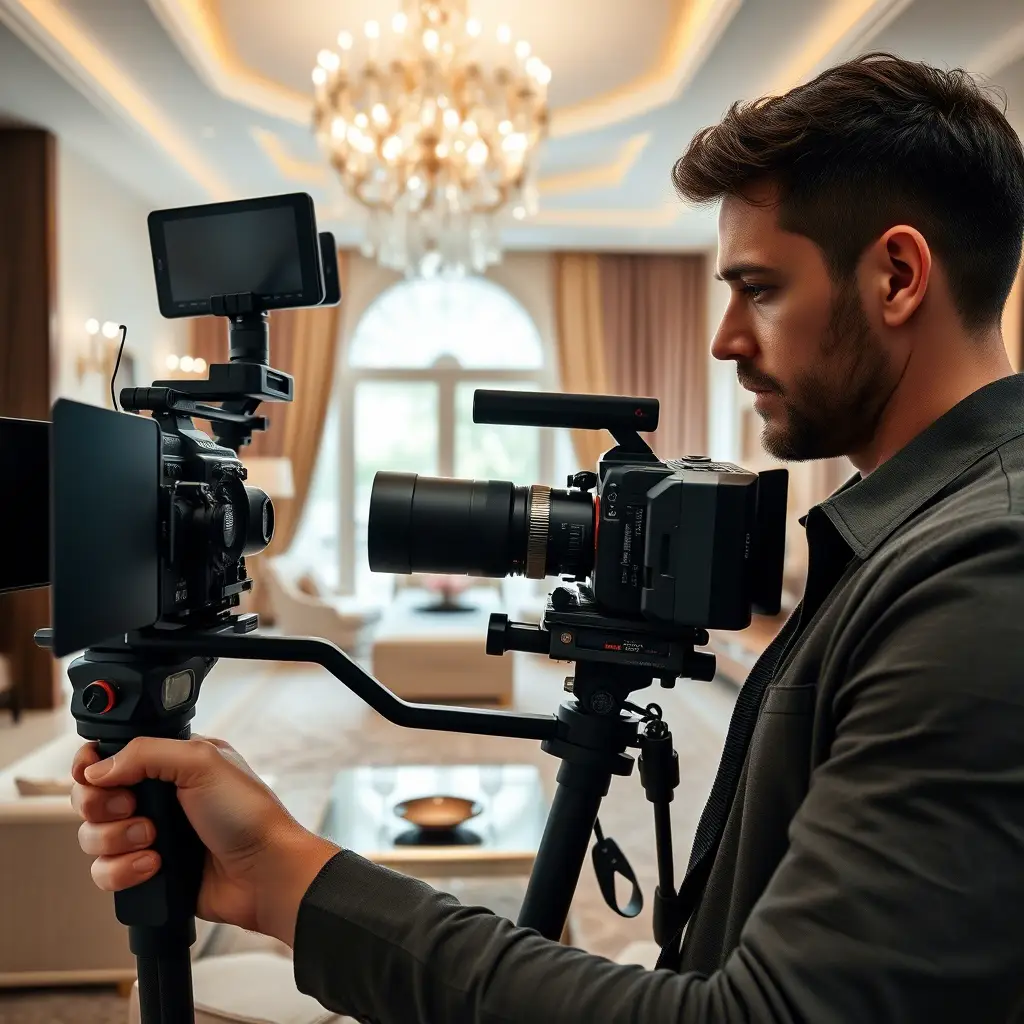
Creating videos that sell million-dollar homes requires mastering specific technical and creative approaches that differ significantly from standard real estate content. Let me share some techniques I’ve refined over hundreds of luxury property shoots.
Camera Movement and Stabilization
Smooth, cinematic camera movements are non-negotiable in luxury video production. I always use a high-quality gimbal system—personally, I swear by the DJI RS 3 Pro for most interior work. The flowing, steady shots create a sense of elegance and professionalism that handheld footage simply can’t match.
One technique I’ve found particularly effective is the “reveal shot”—starting tight on an architectural detail and slowly pulling back to reveal the full grandeur of a space. I remember doing this with a custom Italian marble fireplace in a Malibu mansion. We started with a close-up of the intricate veining, then slowly revealed the entire great room with its 20-foot ceilings. The client later told me that shot alone convinced a buyer to schedule a viewing.
Lighting Considerations
How to shoot and edit luxury home walkthroughs successfully often comes down to mastering available light. Unlike lower-end properties where we might rely heavily on artificial lighting, luxury homes typically feature excellent natural light that we want to showcase. I typically shoot during the “magic hour”—that golden time just after sunrise or before sunset when natural light is warmest and most flattering.
However, interior lighting can be tricky. Many luxury homes have complex lighting systems with different color temperatures throughout. I’ve learned to carry a set of LED panels that match daylight temperature (5600K) to fill shadows without creating color cast issues. The goal is to enhance the existing ambiance, not overpower it.
Frame Rate and Technical Settings
Here’s something many newcomers get wrong: best frame rate for real estate videos isn’t always the highest available. For luxury real estate, I typically shoot at 24fps for that cinematic feel, occasionally bumping to 60fps for slow-motion sequences like water features or silk curtains flowing in the breeze. Shooting in 4K is essential—these videos often end up on large displays in real estate offices or buyer presentations.
Post-Production: Where Good Videos Become Great
The editing phase is where luxury real estate videos truly come to life. This is also where I see the most mistakes from newcomers to the field. Video editing mistakes to avoid in real estate include over-editing (too many transitions and effects), poor color grading that makes spaces look unnatural, and pacing that’s either too fast or painfully slow.
Choosing the Right Editing Software
When discussing best real estate video editing tools for beginners, I usually recommend starting with Adobe Premiere Pro or Final Cut Pro X. Both offer professional-grade capabilities with learning curves that aren’t impossibly steep. For those just starting out, DaVinci Resolve is an excellent free option that’s surprisingly powerful.
I’ve been using Premiere Pro for years, mainly because of its integration with After Effects for motion graphics and Adobe Audition for audio work. The Creative Cloud ecosystem makes workflow incredibly smooth when you’re handling multiple luxury property projects simultaneously.
Color Grading for Luxury Feel
How to edit million-dollar home videos requires understanding that color grading can make or break the luxury perception. I always aim for a slightly warm, inviting tone while maintaining natural-looking colors. Over-saturation is a common mistake—luxury buyers are sophisticated and can spot artificial enhancement from a mile away.
One technique I’ve developed is creating custom LUTs (Look-Up Tables) for different types of luxury properties. Mediterranean-style estates get warmer, more golden tones, while modern minimalist homes might receive cooler, more neutral grading. The key is enhancing the property’s existing character rather than imposing a generic “luxury” look.
Sound Design and Music Selection
Audio is often overlooked in real estate video, but it’s crucial for luxury properties. I always include subtle ambient sound—perhaps distant ocean waves for coastal properties or gentle wind through trees for mountain estates. The music should be sophisticated and understated. I avoid anything with prominent melodies that might distract from the visual experience.
Advanced Strategies and Emerging Trends
The luxury real estate video landscape continues evolving rapidly. Staying ahead of trends while maintaining timeless elegance is an ongoing challenge that keeps this work exciting.
Drone Integration
Aerial footage has become expected for luxury properties, but the key is using it strategically rather than just because we can. I plan drone shots to reveal the property’s relationship to its surroundings—showing how a hillside mansion commands valley views or how a waterfront estate flows seamlessly to its private dock.
Current FAA regulations require Part 107 certification for commercial drone work, which I highly recommend obtaining. The test isn’t particularly difficult, and having proper certification opens doors with high-end real estate agents who won’t work with uncertified operators.
Virtual Reality and 360-Degree Content
While traditional video remains king, I’m increasingly incorporating 360-degree cameras for virtual walkthrough experiences. The Insta360 Pro 2 has been my go-to for this type of content. It’s particularly valuable for international buyers who can’t visit properties in person.
However, I’ve learned that VR content works best as a supplement to, not replacement for, traditional video. The cinematic storytelling possible with conventional cameras still creates stronger emotional connections than immersive VR experiences.
Live Streaming Events
One emerging trend I’m excited about is live-streamed luxury property events. I recently coordinated a live virtual open house for a $8 million penthouse that attracted viewers from twelve different countries. The real-time interaction capability allowed potential buyers to ask specific questions and request particular views, creating an engaging experience that traditional video couldn’t match.
As luxury real estate marketing continues evolving, video remains the most powerful tool for creating emotional connections between properties and potential buyers. The technical skills are learnable, but the artistry of visual storytelling—that’s what separates competent videographers from those who consistently sell luxury properties.
The investment in quality video production pays dividends not just in faster sales, but in stronger relationships with real estate agents who see the value we bring to their luxury listings. Whether you’re just starting out or looking to elevate your existing real estate video work, remember that in the luxury market, excellence isn’t optional—it’s the baseline expectation.
Ready to transform how you approach luxury real estate videography? Start by studying the properties in your market and imagining the stories they want to tell. Then grab your camera and start telling them.
- How to Sell a Property in the USA: The Ultimate Guide to Maximize Price & Sell Fast
- ChatGPT for Real Estate Agents: 7 Prompts to Script Your Luxury Property Videos
- Luxury Real Estate Video Editing in 2026: How AI is Redefining Premium Property Marketing
- Real Estate Video Editing · 2026 Guide
- Luxury Real Estate Video Editing